
One of the biggest decisions businesses face when planning a new website is whether to choose a custom-built website or a template-based design. Both options can work, but the right choice depends on your goals, budget, and how important flexibility and long-term growth are to your business.
In 2026, many businesses start with templates because they appear cheaper and faster. However, as businesses grow, they often realise those limitations can create problems later.
Understanding the difference between custom websites and templates helps businesses make better long-term decisions.
What is a Template Website?
A template website uses a pre-designed layout that can be customised with your own content, colours, and branding. Templates are commonly used because they are quicker to launch and usually cost less upfront.
For smaller businesses with straightforward requirements, templates can sometimes provide a reasonable starting point.
However, templates also come with limitations around flexibility, scalability, and uniqueness.
What is a Custom Website?
A custom website is built around your business rather than forcing your business into an existing layout. The structure, user journey, design, and functionality are tailored specifically to your goals and audience.
Professional website design focuses on creating a website that supports both user experience and long-term business growth.
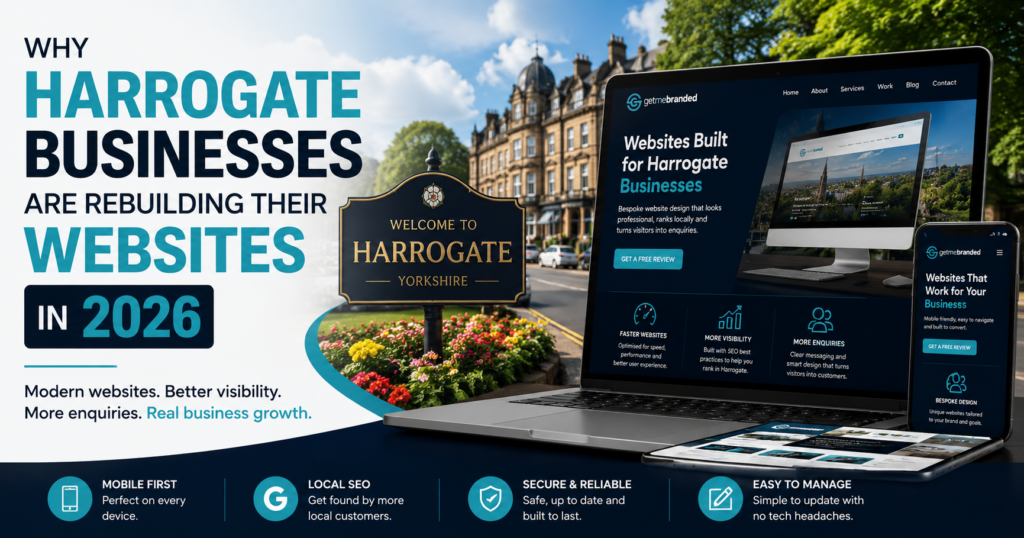
For local businesses, professional website design Harrogate gives you a stronger foundation than a generic template, especially when trust, SEO, mobile performance and enquiries matter.
Custom websites usually provide more flexibility, stronger branding opportunities, and better control over functionality and future expansion.
The Main Advantages of Template Websites
- Lower upfront cost
- Faster launch time
- Simpler setup for smaller projects
- Suitable for basic online presence websites
Templates can work well for businesses that need a simple brochure-style website without complex functionality or advanced conversion requirements.
The Main Advantages of Custom Websites
- Built specifically around your business
- Greater flexibility and scalability
- Stronger branding and positioning
- Improved user experience
- Better long-term SEO structure
- More freedom with functionality and integrations
Custom websites are often better suited to businesses focused on lead generation, SEO growth, and stronger conversion performance.
Good branding also integrates much more naturally into a custom-built website experience.
Templates Can Become Restrictive Over Time
One of the biggest issues businesses face with templates is scalability. What works initially may become restrictive as the business grows or requires more advanced functionality.
Many businesses eventually outgrow their original template setup and need a more tailored solution later.
Learn more in 5 signs your business has outgrown its branding.
SEO and Performance Matter Too
Website structure, speed, and usability all affect SEO and conversions. Poorly built templates can sometimes create unnecessary code bloat, slower performance, and technical limitations.
Strong SEO foundations rely heavily on clean structure, performance, and user experience.
Reliable website hosting and ongoing website maintenance also play a major role in long-term website performance.
Which Option is Right for Your Business?
There is no universal answer. Some businesses genuinely only need a simple online presence. Others need a website that actively supports lead generation, SEO, automation, integrations, and long-term growth.
The key is understanding what your business actually needs your website to achieve.
Businesses focused on growth, positioning, and conversion usually benefit more from custom website development over time.
Final Thoughts
Template websites can work well for certain projects, but they are not always the best long-term solution for growing businesses.
A custom website gives businesses more flexibility, stronger branding opportunities, and better control over performance and user experience.
If you are unsure which approach is right for your business, get in touch and we’ll help you plan the best solution for your goals.